BIO
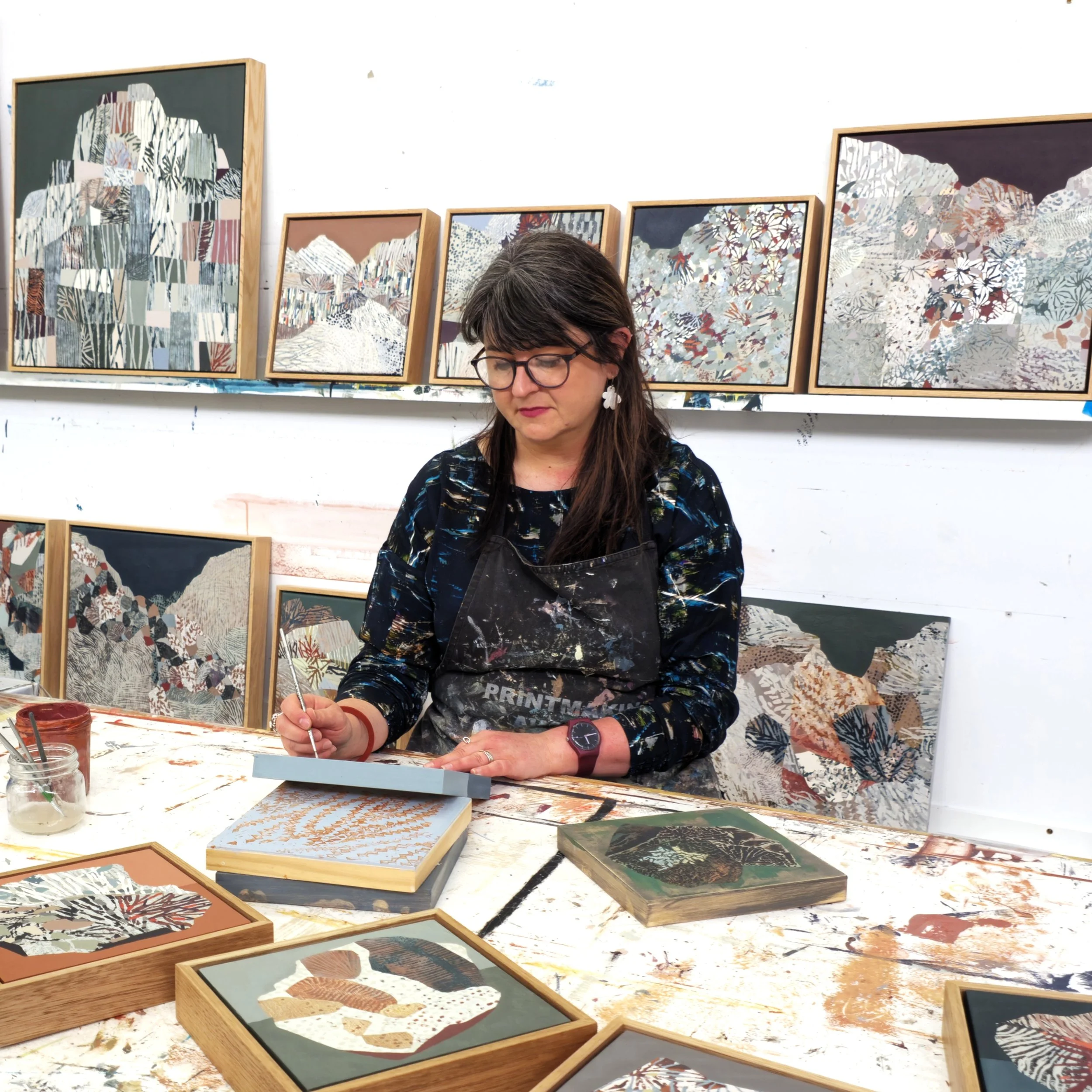
Liz Wickramasinghe is an artist based in Djilang/Geelong on Wadawurrung Country, working with a distinctive, multi-layered process that combines techniques from both painting and printmaking. She began developing this process while studying Fine Art at RMIT in 2008, for which she received a Dean’s List Award as well as an Academic Excellence Award. Liz also completed a Bachelor of Design (Honours) at Swinburne University in 2002, where she developed a strong interest in Japanese design and aesthetics.
After studying, Liz worked in private and state galleries and museums, including various archival and exhibition roles at the National Gallery of Victoria. She later worked as a secondary school teacher, specialising in visual arts. In 2013, Liz relocated from Melbourne to the surf coast with her husband and re-engaged with her art practice while raising her young sons, establishing her professional studio practice in 2019. Currently, Liz divides her time between her family, creative practice, teaching, and working as a gallery assistant at Boom Gallery. She has exhibited primarily with Boom Gallery since 2021.
Liz has work in private collections in Australia and abroad and has been a finalist for the St Columba’s Art Prize and Harden Landscape Prize in 2026, Corner Store Gallery’s Inside This Box Prize in 2024, and Brunswick Gallery’s Small Works Art Prize in 2021.
ART PRACTICE
Liz Wickramasinghe’s work often reflects on the tension and interconnectedness between human-made and natural worlds. Her richly layered paintings draw from the landscapes, ecologies and botanica of her local environment, including wetlands, coastal dunes, mountains, rock formations and reefs and significant places she has encountered throughout her life.
Combining painting, masking and relief-printmaking, Liz explores layering, repetition, linework and pattern, drawing on intricate forms found in nature as well as textiles, design and the built environment. Her compositions often resemble collage, with geometric and organic shapes layered, rearranged and positioned around, above and beneath one another. Play, curiosity and experimentation are central to her visual language, balancing intuitive composition with spontaneity and exploration. Her works shift between micro and macro perspectives, from expansive landscapes to intimate details and often overlooked elements of the natural world.
Through accumulation, concealment and discovery, imagery is built, obscured, revealed and reworked, creating richly textured surfaces that invite close observation and reflection on our experience of, and impact on, the natural world.